Your team arrives early, works late, and stays busy throughout the day. Yet despite everyone’s efforts, the business still feels like it’s constantly playing catch-up.
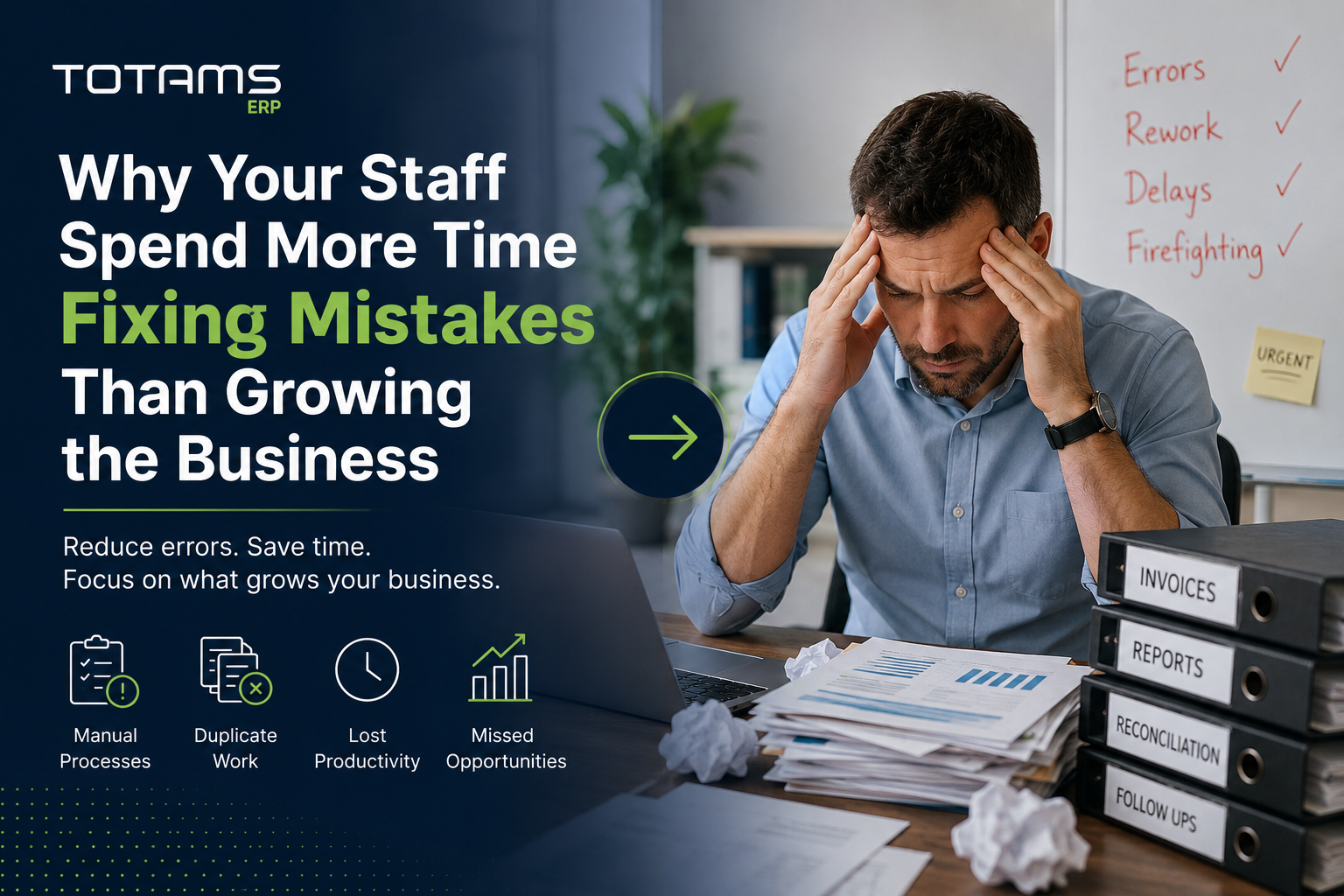
If this sounds familiar, you’re not dealing with a people problem. You’re dealing with a process problem.
Many growing businesses unknowingly trap their employees in a cycle of fixing preventable mistakes instead of creating value. The result is increased stress, reduced productivity, frustrated customers, and missed opportunities for growth.
The good news? These problems can be solved.
Mistakes happen in every business. But when errors become part of daily operations, they quietly drain your organisation’s resources.
Every hour spent correcting avoidable mistakes is an hour not invested in growing the business.
For many medium-sized businesses, growth outpaces systems.
Processes that once worked for a small team begin to break under increasing complexity.
Common causes include:
When employees repeatedly enter information into spreadsheets, emails, and multiple systems, mistakes become inevitable.
A single typo can lead to:
Manual work doesn’t just slow your business down—it increases risk.
How often does the same information get captured multiple times?
Operations update one system.
Finance updates another.
Warehouse teams maintain separate records.
HR keeps its own spreadsheets.
Disconnected systems force employees to repeat work unnecessarily.
The result?
More administration. More confusion. More opportunities for errors.
Decision-makers cannot fix problems they cannot see.
Without real-time information, managers often rely on outdated reports and assumptions.
This leads to:
When everyone works from different versions of the truth, mistakes multiply.
Many businesses rely heavily on “the person who knows how things work.”
But what happens when that person is absent, resigns, or moves departments?
Knowledge trapped in individuals creates operational risk.
Consistent processes create resilience.
The greatest cost isn’t the mistake itself.
It’s what your team could have achieved if they weren’t fixing it.
Imagine if your operations staff spent more time improving workflows.
Imagine if your finance team focused on analysis instead of corrections.
Imagine if maintenance teams prevented breakdowns rather than responding to them.
Imagine if managers had the time and data needed to drive strategic growth.
Growth doesn’t come from working harder.
It comes from removing the friction that slows your people down.
Automation isn’t about replacing people.
It’s about allowing people to focus on work that matters.
By streamlining processes and connecting departments, businesses can significantly reduce avoidable errors.
Practical improvements include:
The outcome is simple:
Less firefighting.
More forward thinking.
Totams ERP is designed to help growing businesses regain control over their operations.
Instead of managing disconnected systems and manual processes, Totams provides an integrated environment where information flows seamlessly across departments.
Finance
Reduce invoice errors, improve reporting accuracy, and gain better visibility into financial performance.
Operations
Standardise processes and monitor activities in real time to improve efficiency and accountability.
Logistics
Improve order accuracy, track movements, and reduce delays caused by poor communication.
Manufacturing
Manage production more effectively while reducing costly operational disruptions.
Maintenance
Use the Totams Checklist App to digitise inspections, manage preventative maintenance activities, and reduce equipment-related downtime.
Assets
Track critical assets and improve utilisation while maintaining accurate records.
HR
Maintain employee information and streamline administrative processes.
TED App
Secure QR-based control provides improved traceability and accountability where access and verification are essential.
The result is an organisation that spends less time correcting mistakes and more time creating value.
If your staff spend most of their day fixing yesterday’s problems, it’s worth asking an important question:
How much growth are those mistakes costing you?
Businesses don’t lose momentum overnight.
It happens gradually through inefficient processes, duplicated work, and small errors that compound over time.
The organisations that thrive are those that recognise these patterns early and invest in systems that support sustainable growth.
Your people are capable of far more than correcting spreadsheets and chasing missing information.
Give them the tools to focus on what they do best: improving performance, serving customers, and helping your business move forward.